

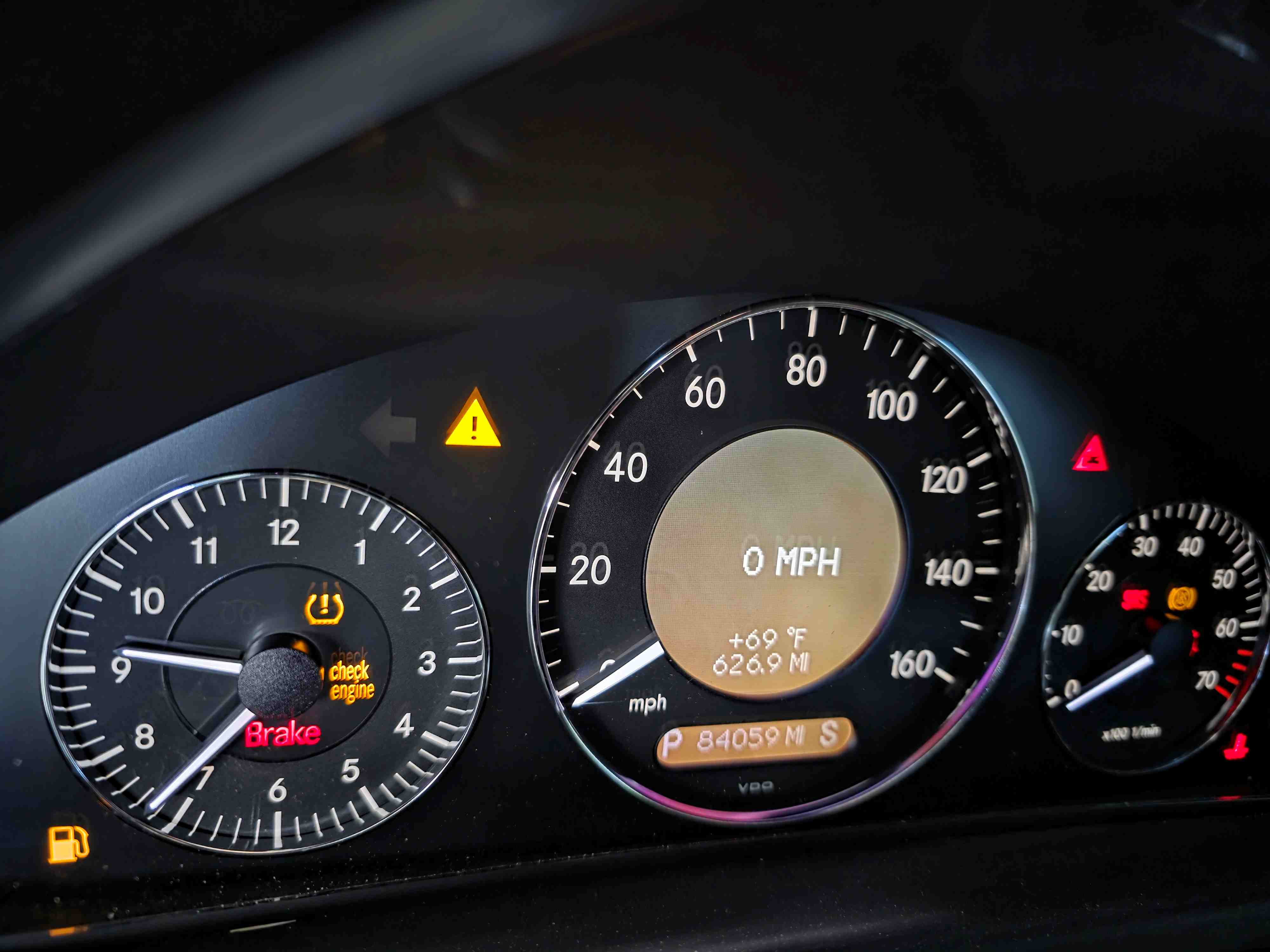
There was a time when trading in the family car every three or four years was practically an American tradition. Those days are over.
New vehicles have become genuinely unaffordable for a large and growing slice of the population. The average transaction price for a new car hit a record $50,326 at the end of 2025, according to Kelley Blue Book and the average asking price (MSRP) climbed even higher, to $52,627.1 To put that in perspective, the average new car cost roughly $34,000 in 2016. That's a 50%+ price increase in under a decade.
The result? People are holding on to their vehicles far longer than ever before.
The average age of vehicles in the US reached 12.8 years in 2025, according to S&P Global Mobility, marking the second consecutive year of increase. Break it down further and the picture gets even more striking: the average age of passenger cars specifically has climbed to 14.5 years.
To appreciate how dramatic that shift is, consider the historical baseline. In 2000, the average age of a passenger car was just 9.1 years. By 2010, it had risen to 10.8 years. Going back to 1995, the average was only 8.4 years. We've gone from under nine years to nearly fifteen in a single generation.
Today, about 68.5 million cars that are 20 years old or older are still on the road. That's 23% of all cars and light trucks in operation.
And this isn't just a short-term anomaly. CCC Intelligent Solutions projects the average vehicle age will reach 13 years by 2026, driven by improved vehicle durability, high prices, elevated financing costs, longer loan terms, and supply chain disruptions.
The math simply doesn't work for most households anymore. At the end of 2025, more than 20.3% of new-car buyers committed to monthly payments exceeding $1,000 — the highest share ever recorded. Buyers are increasingly stretching loans to 72, 84, and even 96 months just to make the numbers fit.
The average new car cost $47,542 in Q3 2024 — more than $20,000 above the average used car price of $27,177. It was the first time that gap ever crossed the $20,000 threshold.
For most working families, keeping the car they have isn't just a preference — it's a financial necessity.
Here's where things get real.
New vehicles typically come with a 3-year/36,000-mile bumper-to-bumper warranty and a 5-year/60,000-mile powertrain warranty. Once you're past those milestones, every repair, every fluid flush, every timing belt comes out of your pocket.
S&P Global Mobility notes that vehicles between 6 and 14 years old are in the "prime range" for aftermarket service, with more than 110 million vehicles currently sitting in that sweet spot, nearly 38% of the entire fleet. That wave of service demand isn't slowing down.
The older a vehicle gets, the more disciplined its maintenance schedule needs to be. Miss an oil change by 3,000 miles on a 4-year-old car under warranty? Probably fine. Miss it on a 12-year-old car with 140,000 miles? You're gambling with an engine that has no safety net.
So what do most people actually do with their maintenance records?
If you're honest with yourself (probably not much). Maybe a pile of receipts in the glovebox. Maybe a folder somewhere that you haven't opened in two years. Maybe a vague memory that you got an oil change "sometime last spring."
This is the maintenance gap that costs people real money:
For a vehicle you're counting on to last another five or ten years, "winging it" isn't a strategy. It's a risk.
The Vehicle Service Tracker template from AYRMD was built for exactly this situation — the person who owns an older vehicle, wants to stay on top of maintenance, but doesn't want to deal with complicated software, subscription apps, or anything that requires more than opening a file.
It's a spreadsheet. You own it. It lives wherever you save it. No login required.
Here's what it gives you:
Fleet tracking for multiple vehicles. Whether you're managing one car or a small household fleet, each vehicle gets its own dedicated section. Everything is organized and labeled so you always know which records belong to which car.
Service history in one place. Every oil change, tire rotation, brake job, and fluid service goes in. No more digging through the glovebox. No more wondering if you dealt with the coolant flush yet.
Oil change reminders built in. The template flags when your next oil change is due based on your own maintenance interval. You set it once and let the tracker do the math.
Maintenance cost visibility. You'll finally know what you're actually spending on each vehicle per year. That number is usually higher than people expect, and knowing it helps you make smarter decisions about repair vs. replace.
This is where the AYRMD Vehicle Service Tracker goes beyond a basic log.
Each vehicle in the template is linked to an AI assistant — tagged specifically to that vehicle's make, model, year, and mileage. You can ask any question about your car and get a focused, relevant answer without wading through generic forum posts.
"Is it normal for a 2013 Honda CR-V with 118,000 miles to need a timing chain replacement at this mileage?"
"What does a whining noise from the front left wheel typically mean on a Ford F-150?"
"What's the recommended service interval for a 2011 Toyota Camry transmission fluid?"
The template comes in two versions to fit different users:
Version 1 — Simple AI Link (Free AI Access)
This version connects directly to a standard AI query interface. You click the link for your vehicle, ask your question, get your answer. It's fast, it's free, and it requires zero technical setup. Perfect if you just want quick answers when something comes up.
Version 2 — AI with Search Log
This version does everything Version 1 does, but it also records and stores each AI query you make — along with the response — directly in the spreadsheet. Over time, you build a searchable history of every question you've ever asked about each vehicle. Useful when a mechanic brings up something you looked into six months ago. Useful when you're trying to remember if that noise was there before the last repair. Useful when you're deciding whether to keep or sell a vehicle and want a full picture of what you've been dealing with.
If you own a vehicle that's more than five years old and you're not tracking your maintenance in a consistent, organized way. This template is for you.
You don't need to be a car person. You don't need to know anything about spreadsheets. You open it, fill in your vehicle information, and start logging. The structure is already built. The logic is already there. You just use it.
For less than the cost of a pair of windshield wiper blades, you get a tool that helps you protect an asset worth thousands of dollars and potentially tens of thousands of miles.
That's the trade AYRMD is built on: immediate solutions, no learning curve, real results.
→ Get Version 1 — Vehicle Service Tracker (Simple AI Link)
→ Get Version 2 — Vehicle Service Tracker (AI with Search Log)
Sources:
1. Kelley Blue Book / Cox Automotive — New-Vehicle Average Transaction Price, December 2025 (via CarBuzz, January 2026)
2. S&P Global Mobility — U.S. Average Age of Light Vehicles, 2025 (via AAPEX, 2026 & S&P Global, May 2025)
3. Hedges & Company — Average Age of Cars and Trucks on the Road, November 2025
4. CCC Intelligent Solutions — Crash Course Q1 2025; Average Vehicle Age Report (via Claims Journal, April 2025)
5. Edmunds — Q3 2024 Automotive Market Report (via CBT News)
6. Bureau of Transportation Statistics / U.S. Department of Transportation — Historical Average Age Data